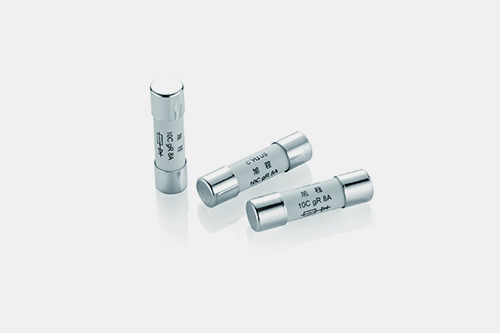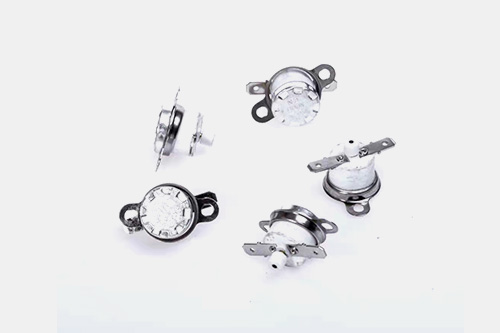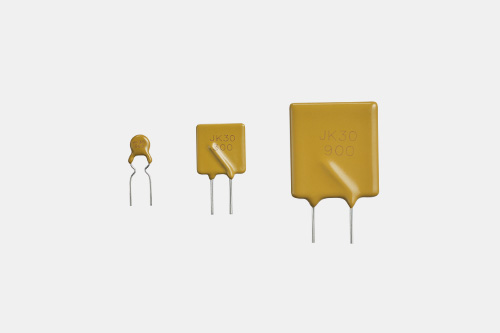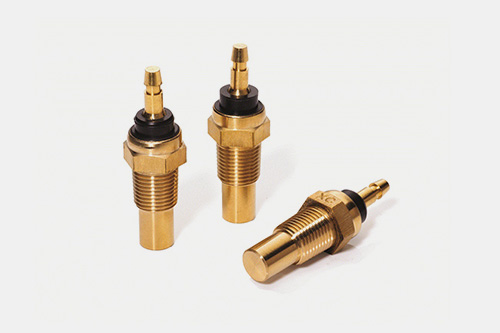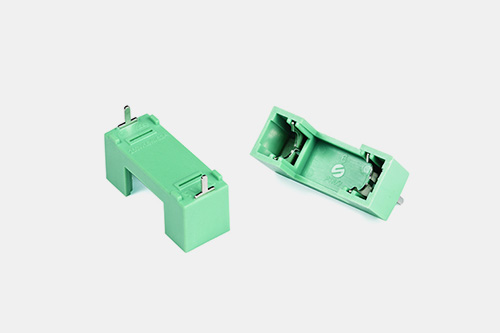

ISO-8820 and QC/T420-2004 standards define it as a fused protective device connected to a circuit that disconnects the circuit when the current exceeds the specified value and time. A fuse is a thermal response device, and the fuse or fuse in the fuse is made of a fusible alloy with high resistivity or a good conductor with a smaller cross-sectional area. In order to protect the wiring harness and other equipment, it is intentionally designed and manufactured as the weakest part of the circuit. Under normal working conditions, the fuse or fuse in the fuse will not blow; When a short circuit or severe overload occurs in the system, the fuse or fuse will immediately melt, thus protecting the circuit and electrical equipment In order to ensure the safe operation of the vehicle's electrical appliances and ensure the proper function of the fuse, it is particularly important to choose the appropriate type and specification. The selection of fuses involves the following factors: current
1. British standard fuse British fuses are mainly used for equipment produced in Commonwealth countries. The British standard fuse case is made of ceramic material, and the product has the characteristics of small size and high cost-effectiveness, which is particularly favored by UPS manufacturers below 240V. 2. American standard fuse American style fuses are the most widely used, covering most power electronic product applications. The American standard fuse case is made of melamine mesh cloth and ceramic lamination process, which has strong impact resistance, small Joule integral value, low power loss, superior DC performance and other characteristics, and is widely used in substations, Electric locomotive and other occasions. 3. European standard fuse The shell of the European standard square fuse is made of ceramic material. This product has the characteristics of low operating temperature, low power loss, and small Joule integral value, and is suitable for applications th
For high current protection zones, the selected fuse should have the following performance: ① large capacity, usually in the tens to hundreds of A; ② Capable of withstanding instantaneous high currents and pulses; ③ High safety and reliability; ④ The operating environment temperature is relatively high; ⑤ Good mechanical characteristics. 1. Selection of fuse type Select the appropriate type based on the working environment, size limitations, current characteristics, voltage characteristics, connection method, etc. of the fuse. Usually, high-voltage fuses for electric vehicles use American standard FWH, FWP, and other series. 2. Determination of fuse parameters The rated current value of fuses is usually based on the value at an ambient temperature of 23 ± 5 ℃. In order to meet the actual operating requirements of electric vehicles, it is necessary to modify the rated current value. By using the above formula, a preliminary rated current of the fuse can be obtained. However, in
For the melt, its operating current and operating time characteristics are the ampere second characteristics of the fuse, also known as the inverse time delay characteristics, that is, when the overload current is small, the fusing time is long; When the overload current is high, the fuse time is short. Our understanding of the ampere second characteristic can be seen from Joule's law that Q=I2 * R * T. In a series circuit, the R value of the fuse remains basically unchanged, and the heat generated is proportional to the square of the current I and the heating time T. This means that when the current is high, the time required for the melt to fuse is shorter. When the current is low, the melting time required for the melt to melt is longer, and even if the rate of heat accumulation is less than the rate of heat diffusion, the temperature of the fuse will not rise to the melting point, and the fuse will not even blow. So, within a certain overload current range, when the current re
The rated current of the melt is not equal to the rated current of the fuse. The rated current of the melt is selected based on the load current of the protected equipment. The rated current of the fuse should be greater than the rated current of the melt and determined in conjunction with the main electrical appliance. The fuse is mainly composed of three parts: the melt, the shell, and the support, among which the melt is a key component that controls the fusing characteristics. The material, size, and shape of the melt determine the fusing characteristics. Melt materials are divided into two categories: low melting point and high melting point. Low melting point materials such as lead and lead alloys have a low melting point and are prone to melting. Due to their high electrical resistivity, the cross-sectional size of the melt produced is larger, and the metal vapor generated during melting is more. They are only suitable for fuses with low breaking capacity. High melting poin
Spiral fuse: There is a fuse indicator on the upper cover of the melt. Once the melt melts, the indicator immediately pops up and can be observed through the glass hole on the ceramic cap. It is commonly used in machine tool electrical control equipment. Spiral type fuse. The breaking current is large and can be used for short circuit protection in circuits with voltage levels of 500V and below, and current levels of 200A and below. Enclosed fuses: Enclosed fuses are divided into two types: filled fuses and unfilled fuses, as shown in Figures 3 and 4. Fuses with fillers are generally made of square porcelain tubes filled with quartz sand and melt, with strong breaking capacity. They are used in circuits with voltage levels below 500V and current levels below 1KA. The unfilled sealed fuse packs the melt into a sealed cylinder, with a slightly smaller breaking capacity, and is used in power grids or distribution equipment below 500V and 600A. Quick fuse: Quick fuse is mainly used f

MB:+86 13924633629 Ms.vicky
E-mail: waimao@xcfuse.com
Factory :
XC Electronics(Shenzhen)Corp.,LTD
Add: Xucheng Technology Park, Daling Street Industrial Park, Huidong County, Huizhou City, Guangdong Province
Shenzhen branch: Shenzhen Xucheng Electronic Commerce co.Ltd
Add: 17A,Bldg 1,Innovation Industrial Park, No. 1 Danqing RD, Jinsha, Kengzi, Pingshan DIST, Shenzhen,Guangdong 518122 China