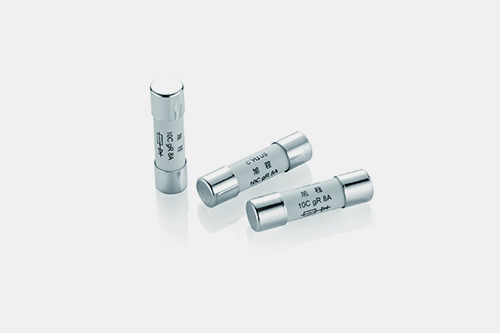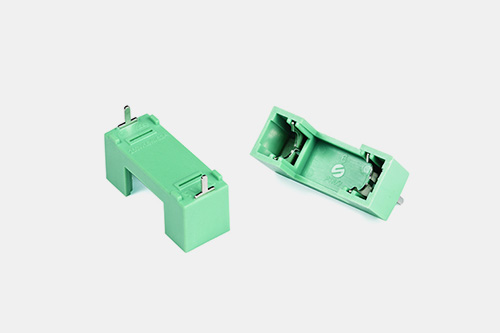



Fuses can be divided into high-voltage fuses and low-voltage fuses based on the voltage used. According to the protection objects, it can be divided into fuses for protecting transformers and general electrical equipment, fuses for protecting Voltage transformer, fuses for protecting power capacitors, fuses for protecting semiconductor elements, fuses for protecting motors and fuses for protecting household appliances. According to the structure, it can be divided into open type, semi closed type, tube type, and jet type fuses. The open type fuse has a simple structure, and the melt is completely exposed to the air. It is supported by porcelain columns and has no support, making it suitable for low-voltage outdoor use. When breaking the current, a large amount of sound and light is generated in the atmosphere. The melt of the semi enclosed fuse is installed on a porcelain frame and inserted into a porcelain box with metal sockets at both ends, suitable for low-voltage indoor use.
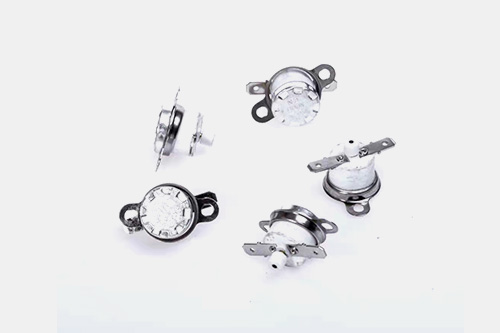
According to the protection form, it can be divided into overcurrent protection and overheating protection. The fuse used for overcurrent protection is commonly referred to as a fuse (also known as a current limiting fuse). The fuse used for overheat protection is generally called "Thermal cutoff". Thermal cutoff can also be divided into low melting point alloy, temperature sensing trigger and memory alloy (Thermal cutoff is used to protect heating appliances or easily heating appliances from high temperature, such as hair dryer, electric iron, rice cooker, electric stove, transformer, motor, etc.; it responds to the rise in temperature of electrical appliances and does not care about the working current of the circuit. Its working principle is different from "current limiting fuse"). According to the scope of use, it can be divided into: power fuse, machine tool fuse, electrical instrument fuse (electronic fuse), and automotive fuse. According to body integration, it can be divi
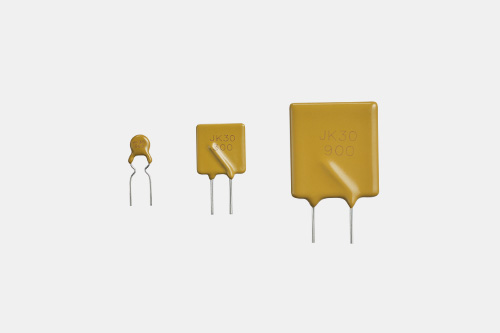
Low zero power resistance: The self resetting fuse has low impedance, low power loss during normal operation, and low surface temperature. Fast overcurrent protection speed: Due to its material characteristics, the self resetting fuse has a much faster response speed to overcurrent conditions than other overcurrent protection devices. Self locking operation: The self resetting fuse is in an overcurrent protection state, locked in a high resistance state with minimal current. Only after cutting off the power supply or the overcurrent disappears, can the low resistance state be restored. Automatic reset: The self resetting fuse resets itself after providing overcurrent protection (troubleshooting), without the need for replacement. High current resistance: Self restoring fuses have excellent high current resistance, and some specifications can withstand 100A current impact. Application: PPTC has a wide range of applications and can be used in various electronic products, communi
1. When operating at a normal operating current of 25 ℃, the current rating of the fuse should usually be reduced by 25% to avoid harmful blowing. Most traditional fuses use materials with lower melting temperatures. Therefore, this type of fuse is relatively sensitive to changes in ambient temperature. For example, a fuse with a current rating of 10A is usually not recommended to operate at an ambient temperature of 25 ℃ and a current greater than 7.5A. 2. The voltage rating of the fuse must be equal to or greater than the effective circuit voltage. The general standard voltage rating series are 32V, 125V, 250V, and 600V. 3. The resistance of a resistor fuse is not important in the entire circuit. Since the resistance of a fuse with an amperage less than 1 is only a few ohms, this problem should be considered when using a fuse in a low-voltage circuit. Most fuses are made of materials with a positive temperature coefficient, so there are two types of resistors: cold resistance a
intelligent For most asynchronous rectifier boost switching converters that use inductors, there is a DC path between the input and output. The existence of this path can have two adverse consequences: firstly, once the output short circuit or severe overload time exceeds a few hundred milliseconds, it will cause the diode (usually Schottky diode) to overheat and damage; Secondly, when for some reason, such as human shutdown, the switching oscillation circuit stops working, and there is still voltage at the load end, which is only one diode lower than the input voltage drop, the output will still consume energy. In addition, if the residual voltage is lower than the steady-state operating voltage range of the load, it will put the circuit in an uncertain state. For applications where the output current is relatively small (less than 5A), using a single-chip current mode controller and high-end current sampling technology can effectively solve both of the above problems. In these
The fuses used in power circuits and high-power equipment not only have the three parts of a general fuse, but also have arc extinguishing devices. This type of fuse not only protects the circuit with a high working current, but also has a high voltage at both ends when the melt melts. Often, the melt has melted (melted) or even vaporized, but the current is not cut off, The reason is that at the moment of fusing, under the action of voltage and current, an arc pulling phenomenon occurs between the two electrodes of the fuse. This arc extinguishing device must have strong insulation and good thermal conductivity, and be negatively charged. Quartz sand is a commonly used arc extinguishing material. Fusing device In addition, some fuses have a blown indicator device, which is used to indicate that when the fuse is activated (blown), its appearance changes to a certain extent, making it easy for maintenance personnel to detect, such as emitting light, discoloring, and popping up sol

MB:+86 13924633629 Ms.vicky
E-mail: waimao@xcfuse.com
Factory :
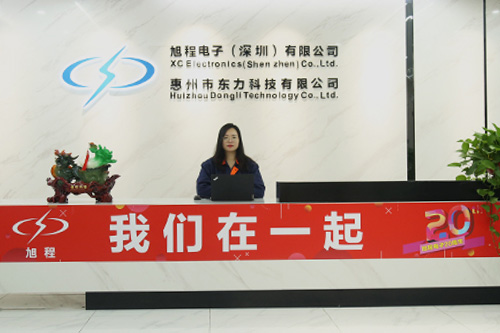
XC Electronics(Shenzhen)Corp.,LTD
Add: Xucheng Technology Park, Daling Street Industrial Park, Huidong County, Huizhou City, Guangdong Province
Shenzhen branch: Shenzhen Xucheng Electronic Commerce co.Ltd
Add: 17A,Bldg 1,Innovation Industrial Park, No. 1 Danqing RD, Jinsha, Kengzi, Pingshan DIST, Shenzhen,Guangdong 518122 China