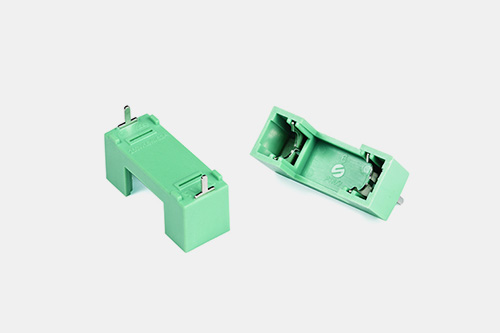



A general fuse consists of three parts: one is the melt part, which is the core of the fuse and plays a role in cutting off the current when blown. Fuses of the same type and specification should have the same material, geometric size, resistance value as small and consistent as possible, and the most important thing is to have consistent fusing characteristics. Household fuses are commonly made of lead antimony alloy; The second is the electrode part, which usually has two important components that connect the melt to the circuit. It must have good conductivity and should not generate obvious installation contact resistance; The third part is the support part. The melt of the fuse is generally thin and soft. The function of the support is to fix the melt and make the three parts a rigid whole for easy installation and use. It must have good mechanical strength, insulation, heat resistance, and flame retardancy, and should not produce phenomena such as breakage, deformation, combus
When current flows through a conductor, it will generate heat due to the presence of a certain resistance in the conductor. And the calorific value follows this formula: Q=I2RT; Where Q is the heat generated, 0.24 is a constant, I is the current flowing through the conductor, R is the resistance of the conductor, and T is the time for the current to flow through the conductor; Based on this formula, we can easily see the simple working principle of a fuse. When the material and shape of the fuse are determined, its resistance R is relatively determined (without considering its resistance temperature coefficient). When an electric current flows through it, it generates heat, and as time increases, its heat also increases. The magnitude of current and resistance determines the rate of heat generation, while the construction and installation of a fuse determine the rate of heat dissipation. If the rate of heat generation is less than the rate of heat dissipation, the fuse will not blo
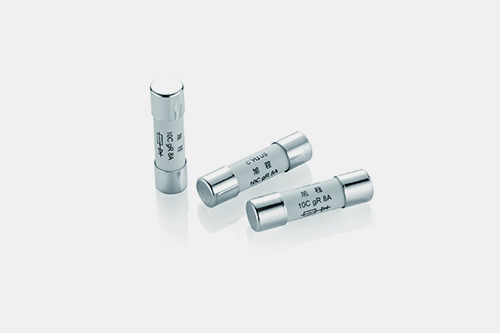
1. Filamentous. Early primitive fuses were directly locked with screws and used for various sizes of old-fashioned switches and sockets. 2. Flaky (bare flake). More convenient to use than traditional filiform. 3. Glass tube shaped. There are several different sizes, commonly found in electronic products. 6.3 x 32 mm (diameter x length) 5 x 20 mm 4. Ceramic tubular. There are several different shapes and sizes to avoid glass bursting. 5. Plastic sheet with metal sheet connector: automotive fuse. 6. Surface mounted component (SMD) type. 7. Cylindrical, plug-in type: directly soldered onto the circuit board, used internally in the product.
When current flows through a conductor, it will generate heat due to the presence of a certain resistance in the conductor. And the calorific value follows this formula: Q=0.24I2RT; Where Q is the heat generated, 0.24 is a constant, I is the current flowing through the conductor, R is the resistance of the conductor, and T is the time for the current to flow through the conductor; Based on this formula, we can easily see the simple working principle of a fuse. When the material and shape of the fuse are determined, its resistance R is relatively determined (without considering its resistance temperature coefficient). When an electric current flows through it, it generates heat, and as time increases, its heat also increases. The magnitude of current and resistance determines the rate of heat generation, while the construction and installation of a fuse determine the rate of heat dissipation. If the rate of heat generation is less than the rate of heat dissipation, the fuse will not
A general fuse consists of three parts: one is the melt part, which is the core of the fuse and plays a role in cutting off the current when blown. Fuses of the same type and specification should have the same material, geometric size, resistance value as small and consistent as possible, and the most important thing is to have consistent fusing characteristics. Household fuses are commonly made of lead antimony alloy lead; The second is the electrode part, which usually has two important components that connect the melt to the circuit. It must have good conductivity and should not generate obvious installation contact resistance; The third part is the support part. The melt of the fuse is generally thin and soft. The function of the support is to fix the melt and make the three parts a rigid whole for easy installation and use. It must have good mechanical strength, insulation, heat resistance, and flame retardancy, and should not produce phenomena such as breakage, deformation, c
1. Filamentous. Early primitive fuses were directly locked with screws and used for various sizes of old-fashioned switches and sockets. 2. Flaky (bare flake). More convenient to use than traditional filiform. 3. Glass tube shaped. There are several different sizes, commonly found in electronic products. 6.3 x 32 mm (diameter x length) 5 x 20 mm 4. Ceramic tubular. There are several different shapes and sizes to avoid glass bursting. 5. Plastic sheet with metal sheet connector: automotive fuse. 6. Surface mounted component (SMD) type. 7. Cylindrical, plug-in type: directly soldered onto the circuit board, used internally in the product.

MB:+86 13924633629 Ms.vicky
E-mail: waimao@xcfuse.com
Factory :
XC Electronics(Shenzhen)Corp.,LTD
Add: Xucheng Technology Park, Daling Street Industrial Park, Huidong County, Huizhou City, Guangdong Province
Shenzhen branch: Shenzhen Xucheng Electronic Commerce co.Ltd
Add: 17A,Bldg 1,Innovation Industrial Park, No. 1 Danqing RD, Jinsha, Kengzi, Pingshan DIST, Shenzhen,Guangdong 518122 China