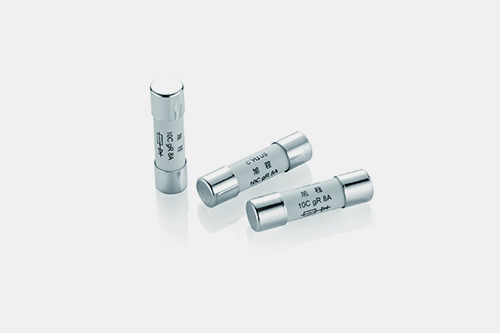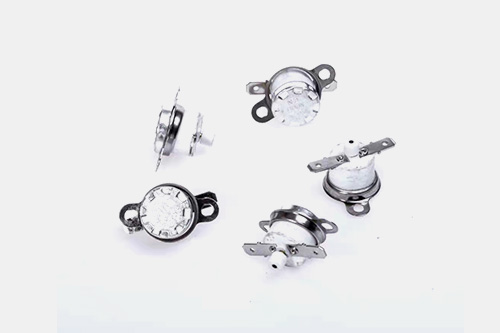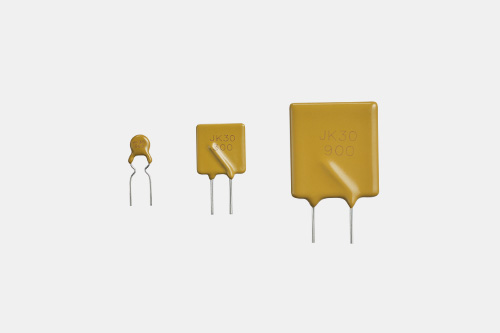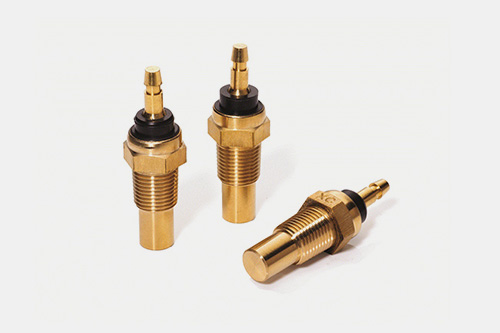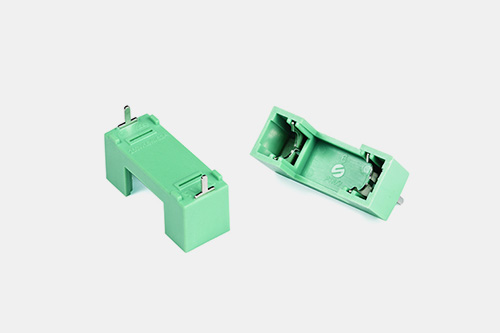

The appearance dimensions of the 251 series fuses are available in multiple models: 2 * 6mm, 2.4 * 7mm, 3 * 9mm, and 2.5 * 6mm. 251 series axial lead fuse, size 2.4 × 7mm, small in size, suitable for various small electrical appliances. The rated voltage range is 125V~250V, and the rated current range is 125mA~6.3A. The appearance of the 251 series resistive fuses is composed of brass nickel plated copper caps and leads, ceramic tubes, etc. The product body colors are green and yellow, among which the appearance of 2 * 6mm and 3 * 9mm resistive fuses is marked with a color ring to distinguish the size of the current. It is a special fast break fuse. The 251 series resistive fuses have a wide range of applications in the industry and circuits, and can be used in current supplies, switching power supplies, computers, chargers, telephones, household appliances, communication products, various instruments and electronic components, motor products, and various small household applia
In a switching power supply circuit, the power input terminal generally uses a regular fuse (fuse, fuse resistance) in series with the circuit of the power input terminal. When an overcurrent fault occurs in the power circuit, the fuse will blow, disconnecting the power input circuit to avoid damaging large components. The markings on the circuit board are generally fuses, similar to resistance markings, but the terminal leads pass through a rectangular box (resistance markings do not pass through). I'm not saying you don't have this ability, but electricity is very dangerous. The fuses are all on the side of the mains. If you accidentally turn on the power, and if the machine's malfunction is not resolved, you will replace the fuse, which is likely to explode again. If the fixed value of the fuse you replace is too large, it is not a fuse. The fuse has a resistance value. In fact, there is resistance to the wire, but the resistance of the wire is very small (the nature of the wir
1. Working environment temperature: Excessive ambient temperature can damage the lifespan of fuses. Slow melting fuses, such as tin ball type, begin to diffuse towards the metal wire when the temperature is about 160 ℃ (150-170 ℃); The temperature at which the melt of a fast melting fuse begins to undergo severe oxidation is approximately 200 ℃ (175-225 ℃). With the oxidation of the fuse from the outside to the inside, multiple diffusion, thermal stress fatigue, etc., the lifespan of the fuse will gradually shorten. Therefore, it is recommended that the delay type fuse fuse should not work above 150 ℃ for a long time, and the fast melting type fuse should not work above 175~225 ℃ for a long time. 2. Pulse current: Pulse impact can generate thermal cycling, leading to diffusion, oxidation, thermal stress, and even acceleration of the fuse. The fuse will gradually age with increasing pulse energy and frequency. The impact resistance life of a fuse depends on the percentage of I2t of
The safety tube is divided into glass safety tube and ceramic safety tube. The glass safety tube body is made of glass material, and the ceramic fuse tube body is made of ceramic material. Whether it is a glass safety tube or a ceramic safety tube, both ends of the material are made of nickel plated brass, and the pins of both types of safety tubes are also made of nickel plated brass material. The fuses inside the fuse are mainly made of alloy. Glass safety tubes are also divided into glass safety tubes with pins and glass safety tubes without pins. According to the speed of melting, there are three specifications: fast break glass safety tubes and slow break glass safety tubes: 3.6 * 10mm, 5 * 20mm, and 6 * 30mm. Next, let's learn about the detailed specifications and models of 30A 250V glass safety tube with pins. There are 5 * 20mm specification JFG5F2300 glass fuse models that can achieve 30A and 250V. This part number can be divided into two types: with pins and without pins
Insert type fuses can be divided into A6, A16, A30, A60, A72, A240, A250, and A600 according to voltage. Their maximum voltages are 6V, 16V, 30V, 60V, 72V, 240V, 250V, and 600V, respectively. The corresponding model of the 2.5A 6V plug-in fuse is A6-250. This model is a fast fusing recoverable fuse. The maximum current of this part number is 40A, the maintenance current is 2.5A, the operating current is 5.0A, and the power generated during operation is 1.2W. The minimum internal resistance is 0.022 Ω, and the maximum internal resistance is 0.08 Ω. The operating range of plug-in fuses in this series is -40 ℃~+85 ℃. The A6-250 plug-in fuse has a square curved foot shape, with a maximum width of 11.4mm, a maximum height of 18.3mm, a foot pitch of 5.1 ± 0.5mm, a minimum foot length of 7.6mm, and a maximum thickness of 3.0mm. There are two packaging methods for A6-250 plug-in fuses: one is ribbon packaging, with a quantity of 3000 pieces per ribbon, and the other is bag packaging, with
When it comes to identifying fuses, the most direct method is to check the silk screen of the fuse. The Shenzhen brand 1812 encapsulates a 1.1A 16V fuse with a corresponding model of ASMD1812-110-16V. The fuse corresponding to this encapsulation current value has a conventional voltage value of 8V ASMD1812-110, a voltage value of 24V ASMD1812-110-24V, and a special voltage value of 33V ASMD1812-110-33V. The silk screen of these models above is all 110, so some people may ask, how do I distinguish fuses with the same current value but no voltage value in the same package? The voltage value we mentioned above is actually the maximum voltage that the fuse can withstand, and we need to remove the detection tool to detect the maximum voltage of the fuse. Let's learn about some other important parameters of the 1812 encapsulated 1.1A 16V patch recoverable fuse. The ASMD1812-110-16 fuse is a patch type recoverable fuse with a rated current of 1.1A, capable of withstanding a maximum volta

MB:+86 13924633629 Ms.vicky
E-mail: waimao@xcfuse.com
Factory :
XC Electronics(Shenzhen)Corp.,LTD
Add: Xucheng Technology Park, Daling Street Industrial Park, Huidong County, Huizhou City, Guangdong Province
Shenzhen branch: Shenzhen Xucheng Electronic Commerce co.Ltd
Add: 17A,Bldg 1,Innovation Industrial Park, No. 1 Danqing RD, Jinsha, Kengzi, Pingshan DIST, Shenzhen,Guangdong 518122 China