

Ceramic gas discharge tubes are the most widely used switching devices in lightning protection equipment. Whether it is for lightning protection of AC and DC power supplies or various signal circuits, they can be used to discharge lightning currents into the ground. Its main characteristics are: high discharge current, small interpole capacitance (≤ 3pF), high insulation resistance (≥ 109 Ω), high dispersion of breakdown voltage (± 20%), and slow reaction speed (the fastest is 0.1-0.2 μ s) . According to the number of electrodes, there are two types of discharge tubes: bipolar discharge tubes and bipolar discharge tubes (equivalent to two bipolar discharge tubes connected in series). Its shape is cylindrical, with two structural forms: with and without leads (some also have protective cards for short circuits in case of overheating). A gas discharge tube consists of two electrodes enclosed at a certain distance in a ceramic tube filled with inert gas. Its electrical performance ba
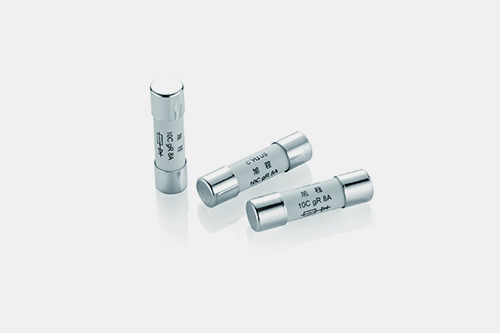
The specifications of resistance fuses are distinguished based on current. If we choose a fuse with a high rated current, it will not be able to ensure safety during use. So when choosing fuses, everyone must choose according to the actual situation. So how can we choose the most suitable resistive fuse? The first point is that everyone should first choose a reliable production enterprise. Only by finding a trustworthy fuse supplier can we obtain the highest quality fuse products from them. Secondly, when selecting fuses, we must pay attention to the different materials of fuses that have different usage effects, and choose the appropriate type based on the specific properties of our own production. We may be more concerned about the price of resistive fuses, but with the continuous development and improvement of the entire market, the price of such fuses has been effectively controlled. In other words, as long as everyone purchases through normal channels, they are not afraid to
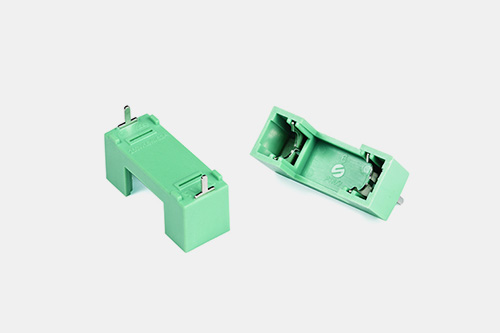
Glass tube fuses can effectively prevent molten metal from splashing onto other devices, while also isolating high temperatures. Ordinary glass tube fuses are commonly used in electronic circuit boards with dense components. Due to their convenient replacement and maintenance, they can also be installed in wires, plugs, or specialized fuse holders; Closed safety tubes can also be used for equipment in explosion-proof locations. Glass tube fuses can be divided into: ultra slow fuses (usually represented by TT), slow fuses (usually represented by T), medium speed fuses (usually represented by M), fast fuses (usually represented by F), and ultra fast fuses (usually represented by FF) based on their fusing speed. The diameter of the glass tube is usually φ 5mm, 5X20mm are the most conventional glass tube fuses that comply with the standard IEC60127. There are important reasons for choosing glass as the material for fuse tubes, and we have analyzed several main reasons. 1. Glass tube
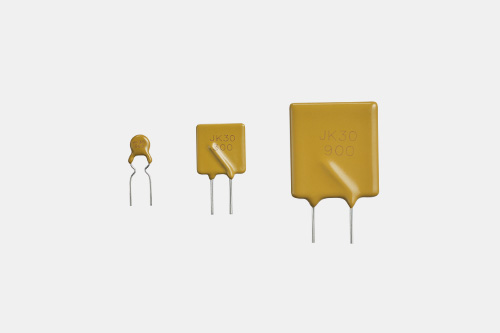
PPTC self recovery fuse is an overcurrent protection component that can automatically reset. It is made by adding conductive particle materials to a polymer organic polymer under high pressure, high temperature, and vulcanization reaction conditions, and processed through a special process. The PPTC self recovery fuse plug-in packaging series is divided into A6 (6V), A16 (16V), A30 (30V), A60 (60V), A72 (72V), A120 (120V), A240 (240V), A250 (250V), A600 (600V) series, which are distinguished by different withstand voltage values. Product features: After circuit obstacles are eliminated, the fuse automatically recovers without the need for manual replacement. It can be reused and reduces costs. Fast action time and recovery time increase reliability. Safety certification: UL, compliant with ROHS certification. The PPTC self recovery fuse of the plug-in has higher voltage and greater current than the patch, better meeting customer needs. Application: Line protection, power ou
1. Where is the self recovery fuse used? Self recovery fuses are used for overcurrent protection between motherboard power supplies, LCD displays for power overcurrent protection, and PGA core circuit overcurrent protection. They are mainly used in various levels of power supply and signal line short-circuit overcurrent circuits. 2. What problems can self restoring fuses solve? The self recovery fuse mainly solves the following problems on the industrial control motherboard: 1. Internal short circuit overload protection problem; 2. External short circuit overcurrent protection issue. The industrial control motherboard is prone to heat generation due to prolonged continuous operation. In addition, there are power circuits and other circuits that experience excessive current due to faults, burning out critical circuits and chip equipment in the motherboard. Regardless of overload, short circuit, or incorrect power connection, it will cause a sharp increase in current in the circu
Fuses, commonly used in electronic products, mainly play a protective role. And fuses have different safety standards, and the certification of fuses varies from country to country. Let's learn about the safety standards of fuses together. Fuse safety standard 1: UL and CSA standards Safety standards for North American regions such as the United States and Canada; The standards for small current fuse tubes are UL248-1/14 and CSA248-1/14. Fuse Safety Standard II: IEC Standard International Electrotechnical Commission standards, safety standards used in Europe and China. The standard for small current fuse tubes is IEC60 127 and GB 9364 (China). Fuse Safety Standard III: KTL Standard Korean Electrical Safety Standards. Fuse Safety Standard 4: JIS Standard Japanese Electrical Safety Standards. The standard for small current fuse tubes is JIS C6575.

MB:+86 13924633629 Ms.vicky
E-mail: waimao@xcfuse.com
Factory :
XC Electronics(Shenzhen)Corp.,LTD
Add: Xucheng Technology Park, Daling Street Industrial Park, Huidong County, Huizhou City, Guangdong Province
Shenzhen branch: Shenzhen Xucheng Electronic Commerce co.Ltd
Add: 17A,Bldg 1,Innovation Industrial Park, No. 1 Danqing RD, Jinsha, Kengzi, Pingshan DIST, Shenzhen,Guangdong 518122 China