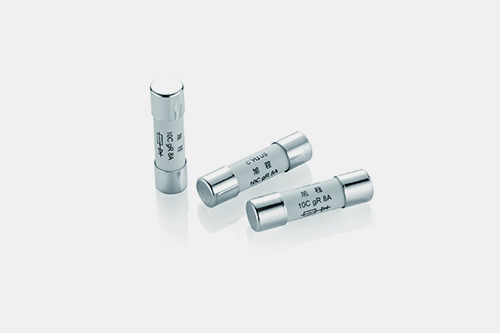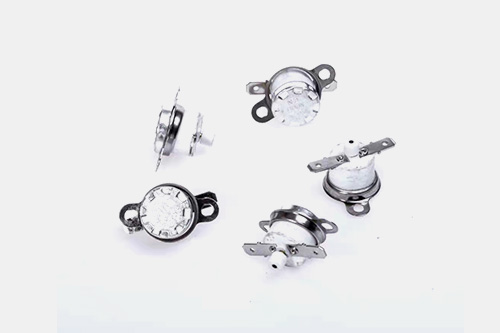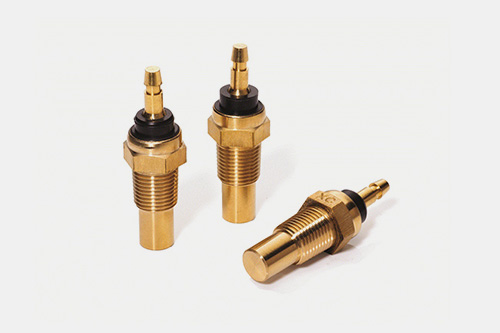



A relay is actually an "automatic switch" that uses a smaller current to control a larger current. Therefore, it plays a role in automatic regulation, safety protection, and conversion circuits in the circuit. The function of a fuse is to: when a circuit malfunctions or is abnormal, the current continuously increases, and the increased current may damage some important or valuable components in the circuit, or burn the circuit or even cause a fire. If the fuse is correctly installed in the circuit, the fuse will fuse and cut off the current when the current abnormally rises to a certain height and time, thereby protecting the safe operation of the circuit. The relay can be 'off' or 'on' through current control, that is, it can be reconnected after being disconnected, while the Shenzhen fuse needs to be replaced after being disconnected, and programs cannot be used to reconnect it.
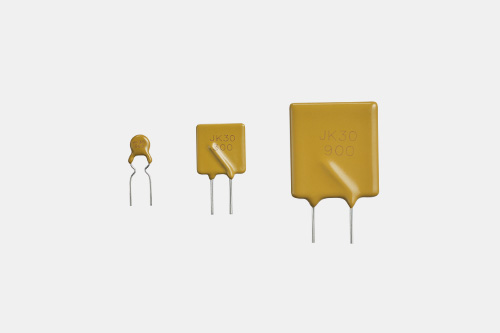
Is there a relationship between the self recovery fuse and the action time, and what is the action time? 1. The action time of the self recovery fuse is related to its internal resistance. The higher the temperature, the greater the current, and the higher the resistance value, and the shorter the action time of the self recovery fuse. In general, in official language, a self restoring fuse passes through 100% of its current in a room temperature of 25 ℃. However, if the rated current exceeds twice or more, the self restoring fuse will return to operation. 2. There are self recovery fuses available from a few seconds to tens of seconds, and the duration depends on the specific model of self recovery fuse used, as well as factors such as the characteristics of the fault. The sensitivity is not related to the price, but to the model of the self recovery fuse. The higher the current and voltage, the more expensive the price
1、 What is a self recovery fuse Self recovery fuse is an overcurrent electronic protection component that uses a polymer organic polymer under high pressure, high temperature, and sulfurization reaction conditions After mixing with conductive particle materials, it is processed through a special process. Habitually applying PPTC (Polymer Positive Temperature) Coefficent, also known as a self restoring fuse. Strictly speaking, PPTC is not a self restoring fuse, and Resettable Fuse is a self restoring fuse. 2、 Principle of self recovery fuse The self recovery fuse is made of high-tech polymer resin and nano conductive grains through special processing. Under normal circumstances, nano conductive grains The body forms a chain like conductive path along with the resin based link, and the fuse operates normally; When a circuit experiences a short circuit or overload, the large current flowing through the fuse causes its temperature to increase. When the Curie temperature is reache
IH: Maximum working current (25 ℃) IT: Minimum operating current (25 ℃) Itrip: Overload current Tmax: Maximum action time of overload current Vmax: Maximum overload voltage Imax: Maximum overload current Rmin: minimum resistance (25 ℃) Rmax: Maximum resistance (25 ℃) Self recovery fuse application The self recovery fuse is connected in series in the DC/AC power circuit. DIP direct insertion or SMD surface mount can be selected PPTC has no positive or negative polarity. As PPTC is in a protected state and has a high surface temperature, it should be installed in a ventilated state. High temperature sensitive components should not come into direct contact with PPTC Application scope: Application of Self Recovery Fuses in ADSL Devices Application of Self Recovery Fuses in Radio Products, Battery Packs, and Charger Products Overcurrent Protection in Automotive Electronics and Components Application of remote control electric toy cars, high-frequency and low-frequency power
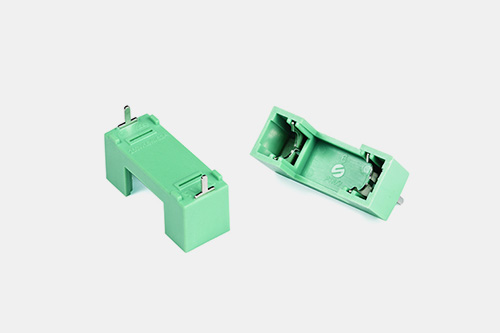
In many electronic devices, fuses are indispensable. Since Edison invented the first plug-in fuse in the 1890s, which enclosed thin wires in a lamp holder, the types of fuses have become more and more diverse, and their applications have become more and more widespread. Here are some common knowledge on fuse parameters, selection, and application. The rated values and performance indicators of fuses are determined based on laboratory conditions and acceptance specifications. There are multiple authoritative testing and appraisal institutions internationally, such as UL certification from Underwriters Laboratories in the United States, CSA certification from the Canadian Standards Association, MTTI certification from the Japan Department of International Trade and Industry, and ICE certification from the International Electrotechnical Commission. The selection of fuses involves the following factors: 1. Normal operating current. 2. The applied voltage applied to the fuse. 3. Abnorma
We all know that when current flows through a conductor, it will generate heat due to the presence of a certain resistance in the conductor. And the calorific value follows this formula: Q=0.24I2RT; Where Q is the heat generated, 0.24 is a constant, I is the current flowing through the conductor, R is the resistance of the conductor, and T is the time for the current to flow through the conductor; Based on this formula, we can easily see the simple working principle of a fuse. When the material and shape of the fuse are determined, its resistance R is relatively determined (without considering its resistance temperature coefficient). When an electric current flows through it, it generates heat, and as time increases, its heat also increases. The magnitude of current and resistance determines the rate of heat generation, while the construction and installation of a fuse determine the rate of heat dissipation. If the rate of heat generation is less than the rate of heat dissipation,

MB:+86 13924633629 Ms.vicky
E-mail: waimao@xcfuse.com
Factory :
XC Electronics(Shenzhen)Corp.,LTD
Add: Xucheng Technology Park, Daling Street Industrial Park, Huidong County, Huizhou City, Guangdong Province
Shenzhen branch: Shenzhen Xucheng Electronic Commerce co.Ltd
Add: 17A,Bldg 1,Innovation Industrial Park, No. 1 Danqing RD, Jinsha, Kengzi, Pingshan DIST, Shenzhen,Guangdong 518122 China