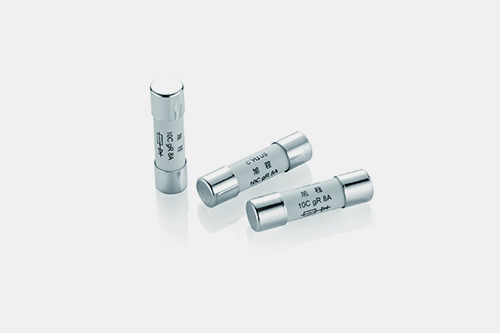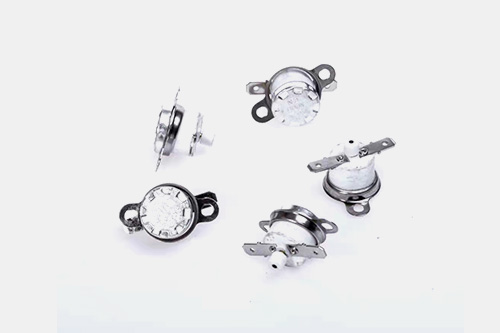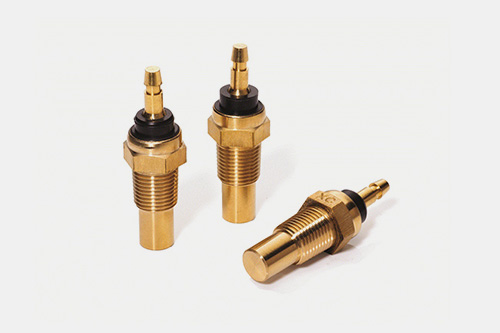


Firstly, normal current: Firstly, we must know the fuse that flows through the circuit chip used in normal current. Usually, we need to reduce the difference between the predetermined amount and then follow the selection principle: the normal current must be less than the rated current and the product's derating factor. Secondly, the fusing current: According to UL standards, Shenzhen patch fuses (fuses) should be able to quickly operate at twice the rated current. But in most cases, to ensure reliable fuses, we recommend that the fusing current be greater than 2.5 times the rated current. In addition, the fusing time is very important, and a judgment must also be made based on the manufacturer's fusing characteristics. Thirdly, short-circuit current: the maximum current value, when we call it the short-circuit current of a short circuit. The rated breaking capacity of various fuses is necessary, and we must be careful not to choose fuses with circuit currents exceeding the rated
I still remember when I was studying electronics and electrical appliances, and every semester when I came home from vacation, I was called by my neighbors to repair the TV. At that time, I used black and white TV sets, and the voltage was also unstable. The most damaged TV set was the fuse. At that time, Shenzhen fuses were ordinary glass tube fuses, and it was not very convenient to buy a fuse in rural areas. Sometimes, iron sheets or wires were used to directly connect the circuit as a fuse (I believe many people have done this before), which could still be used normally. However, this use was very unsafe, and sometimes it could damage other parts of the TV. Since then, I have been deeply impressed by this type of transparent glass tube fuse. Fuses, also known as fuses, are defined as "fuse links" in international standards. They are electrical components installed in a circuit to ensure safe operation of the circuit. Electronic products are all-encompassing, and these produc
We know that in recent years, especially since 2016, domestic factories have increased their machinery and equipment on a large scale, especially the increase in square and SMD fuse automata, which has led to a continuous decline in these products in China. Especially, the price of square fuses has become transparent to the point where customers do not want to negotiate. There are actually several reasons for this situation: 1: It is the continuous decline of the Chinese yuan, the constant hovering of the US dollar exchange rate, and the depreciation of the Chinese yuan 2: There are too many homogeneous products, and in order to win more orders, we can only continuously compress profit margins, which is a common problem in the domestic manufacturing industry 3: After the tax increase in the United States, many orders have been sharply reduced, especially the significant impact of large customer revenue, further forcing fuse factories to compress profit margins and dilute operati
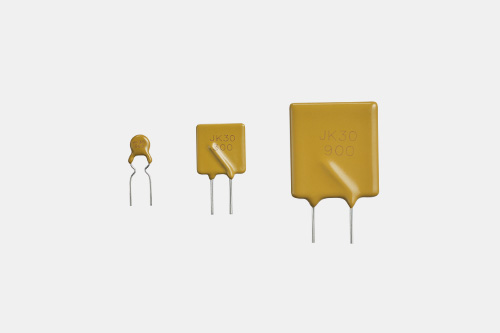
Each type of circuit protection component has specifications, and self recovery fuses are no exception. So, what do you think when holding a self-healing fuse specification book? To put it bluntly, when reading the specifications, the main focus is on the parameters and the meanings they represent: I hold: Maintain current I trip: The maximum action time under the specified current; V max: Maximum voltage that can be withstood I max: Maximum current that can be withstood P d: Stable power consumption in high resistance state R: Zero power resistance measured at a certain temperature R 1max: The maximum resistance value measured at room temperature after one hour of action or soldering back Environmental temperature: The temperature of the still air around PTC Maximum working environment temperature: The highest ambient temperature for PTC safe operation
With the widespread application of self restoring fuses in the electronics industry in Shenzhen, we are paying more and more attention to the safety of electronic products. We need to know the performance of the products used Among the technical indicators of PPTC, one is Vmaxi, which represents the maximum voltage that the self recovery fuse protector can withstand in a blocked state. That is to say, in a circuit where the self recovery fuse is connected in series, when the current of the circuit is abnormal, the self recovery fuse will jump from low resistance to high resistance within a certain time range, thereby preventing the flow of abnormal large current and protecting the subsequent circuit from being damaged by large current. At this time, almost all of the voltage of the circuit is added to the self recovery fuse. If the voltage applied to the self recovery fuse exceeds Vmaxi at this time, it is easy to cause damage to the self recovery fuse, causing permanent damage a
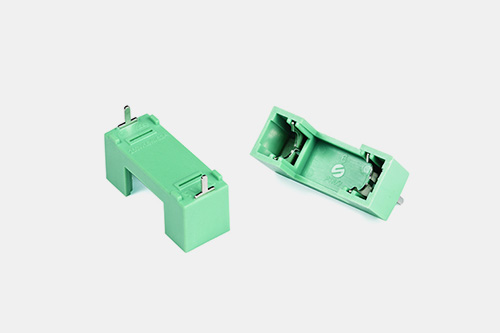
There are many types of fuses, including classification by protection form, scope of use, volume, rated voltage, breaking capacity, and fusing speed. Below, we will introduce the classification by type, which can be divided into: current fuses: Shenzhen patch fuse, miniature fuses, plug-in fuses, and tubular fuses; Temperature fuse: RH square type, RP resistance type, RY metal case; Self recovery fuse: plug-in, laminated, patch. 1、 Current fuse Chip fuse. There are specifications such as 0805 and 1206, which use thin film technology to accurately control electrical characteristics. Due to its small size, it is an ideal choice for providing secondary protection for circuits in space limited applications, such as handheld portable electronic devices and various instruments and meters. 2、 Temperature fuse. It is an irreparable disposable thermal protection device, available in RH, RF, RY and other series. The product has a delicate appearance and structure, good sealing performanc

MB:+86 13924633629 Ms.vicky
E-mail: waimao@xcfuse.com
Factory :
XC Electronics(Shenzhen)Corp.,LTD
Add: Xucheng Technology Park, Daling Street Industrial Park, Huidong County, Huizhou City, Guangdong Province
Shenzhen branch: Shenzhen Xucheng Electronic Commerce co.Ltd
Add: 17A,Bldg 1,Innovation Industrial Park, No. 1 Danqing RD, Jinsha, Kengzi, Pingshan DIST, Shenzhen,Guangdong 518122 China